
Napoli Feeds You, Loves You. Mangia!
(Day 17 of 31 — story crumbs from the world of Loveandpizza.it 🍕)
This post was originally published at the beginning of my 31-day Loveandpizza.it journey. The complete English series is now here for you to explore, one story crumb at a time. 🍕
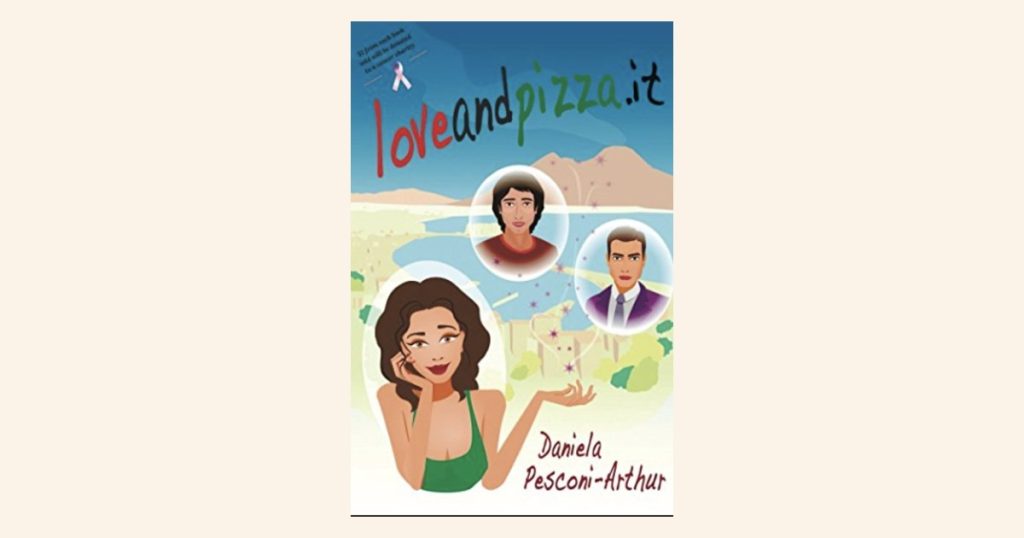
The book is called Loveandpizza.it, so it would be super rude not to talk about the food.
But here’s the thing about eating in Napoli: it isn’t really about the food at all. Add to the recipe: love, argument, identity, and something very close to religion. Here’s how to do it properly.
Pizza, and how to eat it like you mean it

A true Neapolitan pizza is soft, blistered, a little floppy in the middle, and eaten with reverence. You don’t rush it. You take it piano piano – slowly, slowly – tasting every bite, because a pizza this good deserves your full attention.
And remember this: the pizza you’re eating isn’t only your lunch or dinner. A Margherita pizza is all about identity. It has an origin story involving a queen and a patriotic flag of tomato, mozzarella and basil. The dough is protected by rules.
And then there’s UNESCO – though not in the way most people think. You’ll often hear that Neapolitan pizza is “UNESCO World Heritage.” It isn’t. What UNESCO recognised, back in 2017, is the Art of the Neapolitan Pizzaiuolo, so not the pizza at all, but the craft of the people who make it. The spinning of the dough. The wood-fired oven. The master in his bottega, with an apprentice watching his hands, learning the way it’s always been learned. When UNESCO recognised the tradition in 2017, around three thousand pizzaiuoli were living and working in the city, passing the craft down.
Do you see it? Even UNESCO agrees with me. It was not really about the food, but about the people.
(There is a character in the book who could talk about this for an hour. I won’t say who, but if you’ve read my previous posts, you’ll know. 😌)
Coffee, standing up, in thirty seconds
Espresso. At the bar. Drunk in three sips, standing. No enormous mugs, no armchairs, no syrups, no names shouted across a room.
And it turns out there’s a very practical reason for all that standing: in an Italian bar, al banco – at the counter – is the cheap way to drink. Sit yourself down at a table and you’ll often pay more for the privilege. So the whole ritual is part tradition, part good sense: in, un caffè, thirty seconds, out, back into your day. ☕

Then there’s the cappuccino rule. You’ll have heard it: never after eleven in the morning.
Here’s the truth, which I love even more. There’s no rule. There’s no law. Nobody will arrest you. But a cappuccino is mostly milk, and milk is basically a small meal, so to a Neapolitan it belongs at breakfast, full stop. Also, they believe that consuming milk after a meal will mess with your digestion.
Try that in Napoli and you’ll most probably get the look. 😒
(Carolina orders one anyway, at all the wrong times. She likes to live dangerously.)
Sfogliatella, and the sweet things
A sfogliatella is a little shell of crisp, flaky pastry filled with sweet ricotta, still warm from the oven, that shatters gloriously all down your front.
Except, there are two of them, and this is where Napoli gets dangerous. There’s the riccia: the famous one, all those paper-thin layers fanned out like a seashell, crunchy, messy, an event. And there’s the frolla: same sweet ricotta inside, but wrapped in soft shortcrust pastry instead. Round, gentle, no shrapnel.
Ask a Neapolitan which is the real sfogliatella and settle in, because you’ll be there a while. I’m not picking a side. I’d like to be allowed back into the city. 😅 Fancy trying one? Then your go-to place is La Sfogliatella Mary
Order one. Order two. And if you have room, try a babà – a little rum-soaked sponge so beloved that “sì nu babà” is a Neapolitan compliment: you’re a babà. You’re sweet.
Note from the author: chocolate, in Carolina’s case, is practically a food group, as you already know, so she’d usually have hers filled with it – but that’s between her and her conscience.
And gelato. Obviously, gelato.
I couldn’t leave without this one.

Gelato isn’t ice cream, whatever the freezer aisle tells you. Less cream, less air, served warmer and softer, so the flavour hits you properly instead of numbing your tongue. It’s denser, silkier, and it tastes like the actual thing it claims to be.
You eat it walking. That’s the rule, and it’s the best rule Italy has. Cone in hand, wandering, no destination, talking rubbish with someone you like, hoping you can outpace the drips in the heat. (You can’t. Nobody can. That’s part of it.)
Carolina, being Carolina, goes chocolate. Every time. She’d like it noted that she considers this a perfectly balanced decision arrived at after careful thought, and Lisa would like it noted that Carolina has never once considered another flavour in her life. These two… 🙄
The kindness you can’t see
Here’s my favourite Neapolitan thing of all: the caffè sospeso. The “suspended coffee.”
You go into a bar. You order one coffee. You pay for two. The second sits there, unclaimed, on the books – and later, someone who can’t afford one comes in and asks whether there’s a sospeso. And there is.
You never know who you paid for. They never know who paid. Napoli invented that. If you want to understand this city in one gesture, it’s that one.
The real secret
Here’s the thing nobody tells you: in Napoli, feeding you is how people love you.

Let me give you the proof.
When I lived there, I taught English to an entire family. Going to their house for my classes was like visiting your grandma on a Sunday. They’re not my students anymore, obviously. They became something even better: my friends.
That was years ago. Every time I go back to Napoli – every single time – I go to their house, and the mother cooks me lunch. Not a small lunch. A Neapolitan one. And I sit at that table, and I am fed and fussed over and interrogated and fed some more, and I get the whole nonna’s hug all over again, every time, as though I’d never left.
You could call that hospitality. I call that love, served at a table, with too much food on it. So much like us, Brazilians! 🥰
Sit at a Neapolitan table and you will be fed until you beg for mercy! 😅 That’s the whole heart of the book, really. Carolina arrives armoured and careful and quite sure she needs nobody. And Napoli sits her down, puts a plate in front of her, and says: mangia.
Good luck staying guarded through that.
So, a very important question: pizza or pasta? And what’s the one dish that instantly tastes like home to you? 👇
Dani. x
P.S. Loveandpizza.it is coming back in English, Italian and Portuguese. Save your slice and you’ll be first to know the moment your edition’s ready. 🍕
Still hungry for another slice?
Follow @loveandpizza_it for story crumbs, Napoli discoveries and
beautifully complicated hearts. ❤️🍕


Gotta love Italian hospitality! In Switzerland we have the privilege of having it in our everyday life.
Why ask for the impossible choice, pizza or pasta? Recently, for health reasons, I stepped away from bad carbs. I do make exceptions though, my favorite is actually Pinsa.
I have heard of the concept of caffè sospeso but never seen it come to live.
There is an Italian canton in Switzerland, isn’t there? 🤩 Is that where you live? I’ve tried Pinsa before, my husband loves it!
We absolutely have an Italian speaking canton in Switzerland – it’s called Ticino, and it’s lovely. However, we live in the German speaking part, about 40km west of Zurich.
Pinsa is said to be easier to digest because the dough is made only partly from wheat flour and rises longer than the average pizza dough. This makes the crust lighter and fluffier.
oh no oh no! you’ve made me far too hungry reading this article Daniela – the yummy piazza, and the fantastic Sfogliatella!
hehe sorry, Alice! It was inevitable! 🤤
How interesting to learn about the espresso ritual of standing vs. seated! I never knew that. I am not sure I can finish it in 3 sips – well, I can… I am just not sure I would want to. I like to savor it and sip it slowly.
I read someone else that you will get a stink-eye if you lick the little espresso spoon after mixing. Another, “who knew?!?”
I know! I much prefer to have mine sitting down – accompanied by a chocolate cornetto, of course! 😋
I’m craving both pizza and pasta after reading this piece, albeit the latter tastes more like home because my wife cooks a range of pasta recipes.
That was my intention, Danwil! And lucky you that your wife is such a good cook! 😀