
Vesuvio is Always Watching
(Day 20 of 31 – story crumbs from the world of Loveandpizza.it 🍕)
This post was originally published at the beginning of my 31-day Loveandpizza.it journey. The complete English series is now here for you to explore, one story crumb at a time. 🍕
Wherever you stand in Napoli, sooner or later you look up (or ahead) – and there it is: Vesuvio. (Vesuvius, if you’re being formal about it. Nobody in Napoli is.) Vast, silent, impossibly beautiful, and technically capable of ending the whole party at any moment. Neapolitans live in its shadow and simply… shrug.
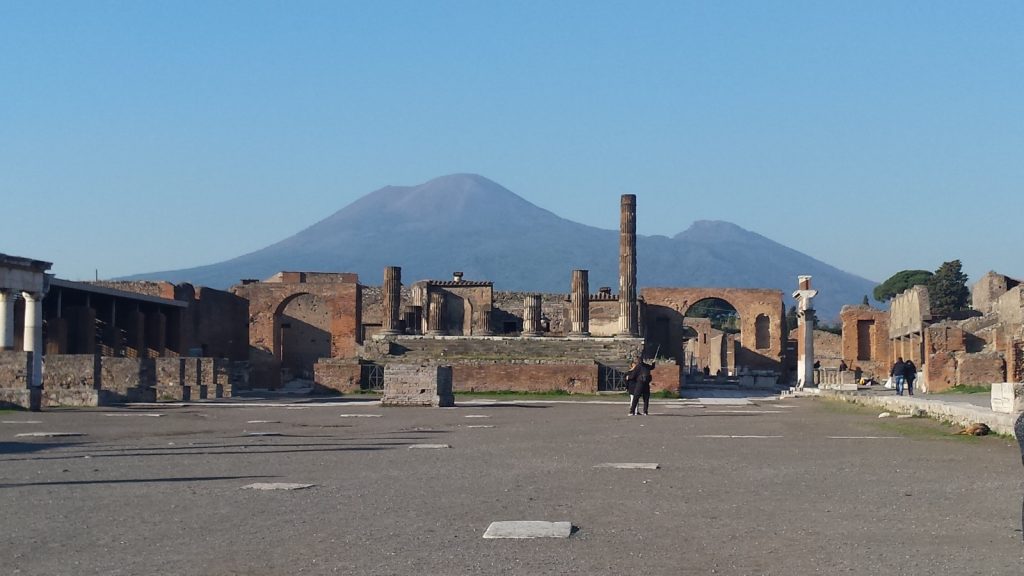
I find that magnificent, and terrifying.
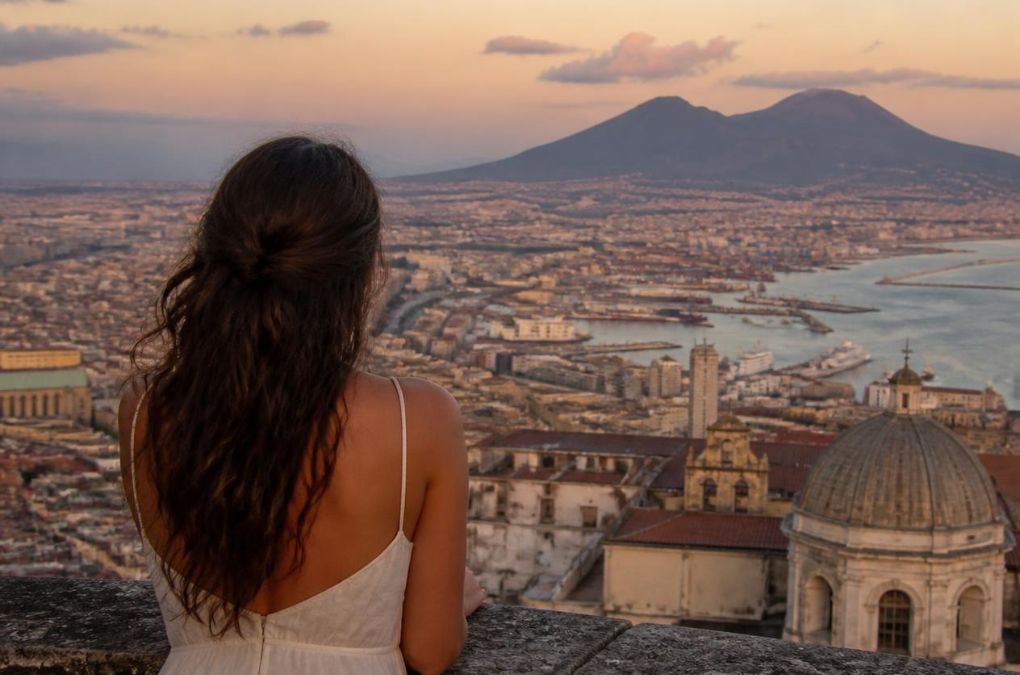
The mountain in every window
It’s in every photo whether you meant it or not. It sits behind the washing lines and the church spires and the ferry masts, a permanent, watchful presence. In the book, it’s always there too, because in real life, it always is.
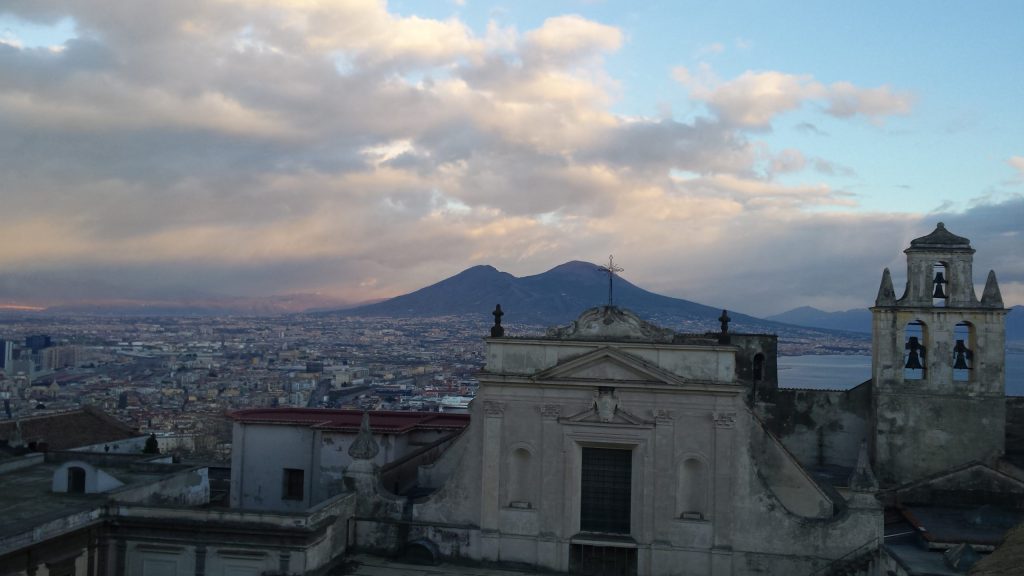
You don’t paint Vesuvio into the background of Napoli. Napoli is painted around Vesuvio.
They don’t even call it a volcano
In dialect, it’s ‘a muntagna. The mountain. Not “the active stratovolcano with a documented history of civilisation-ending eruptions.” Just… the mountain. The way you’d refer to a slightly troublesome relative who’s a bit unpredictable at Christmas but is, on balance, family.
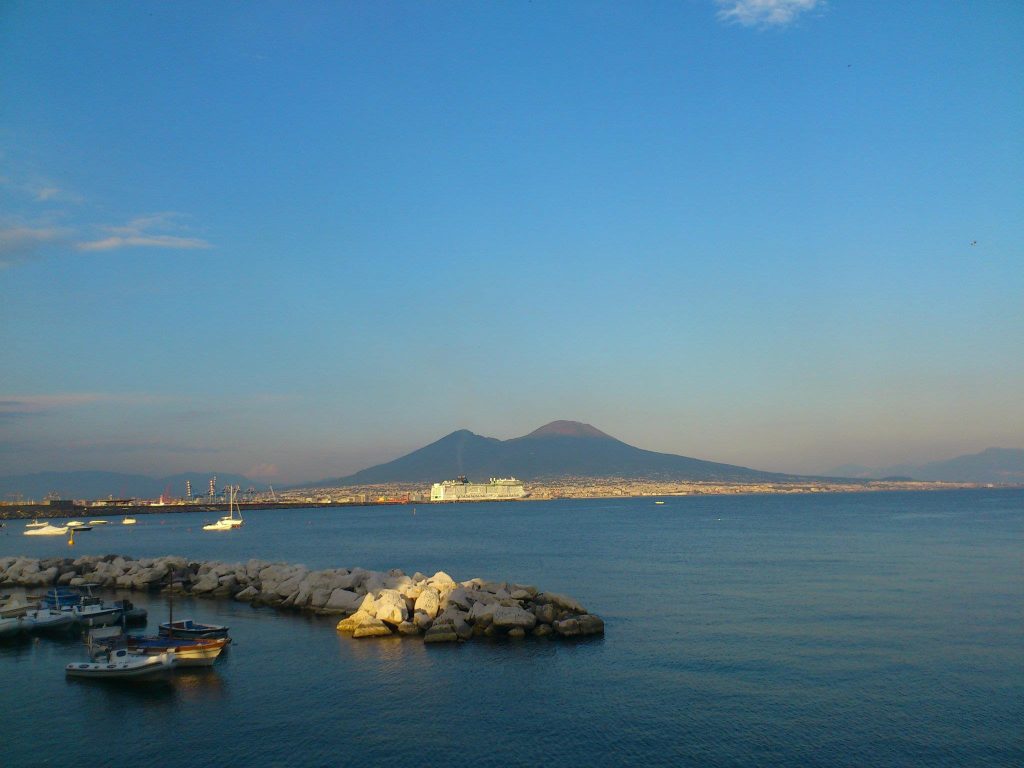
And family it is. Vesuvio is on the ceramics, the tea towels, the fridge magnets, the tattoos, the writing sets (my friend gave me a gorgeous one once!), the football murals, the nativity scenes. Two thousand years of Neapolitans painting the thing that might kill them, over and over. The writer Jeff Matthews, who lived in Napoli for some forty-five years and left behind an entire encyclopedia of the place, reckoned all that art amounted to a kind of ritual propitiation. Keep the mountain flattered, keep the mountain sweet. Look how much we love you. Look how nicely we’ve drawn you. Please don’t.
The mountain also feeds you
Here’s the part that threw me a bit. Volcanic soil is outrageously fertile. So the same slopes that buried Pompeii now grow the pomodorino del piennolo, the little tomatoes hung in bunches on Neapolitan balconies through the winter, and Lacryma Christi del Vesuvio, a wine whose name means “tears of Christ.”
Isn’t this mind-blowing: the mountain that could end Napoli is also, quite literally, why the pizza tastes like that.
I’m sorry, but you couldn’t make it up. If I put that in a novel my editor would gently draw a line through it and write too neat in the margin. But hey, I put it in a novel anyway!
They built a railway up it. Then wrote a jingle.
In 1880 somebody looked at an active volcano and thought: tourists. A funicular railway was built up the side of it, and to promote the opening, Peppino Turco and Luigi Denza knocked out a little song.
That song was Funiculì, Funiculà.
Yes. That one. The one you’re now humming. The most joyful earworm in the history of Europe was an advert for a train ride up a volcano.
And it gets better, because the lyric is a chat-up line. He’s telling a girl he went up the mountain, and asking her to come up there with him. That’s the whole song. Somebody built a railway up the side of an active volcano, commissioned two men to sell tickets, and what those two came back with was a boy trying to talk a girl into getting on it with him.
If you want a single fact that explains the Neapolitan soul, I offer you that one, free of charge.
San Gennaro versus the crater
Then there’s the city’s patron saint, San Gennaro, whose dried blood is kept in a silver reliquary at the Duomo and, three times a year, is said to liquefy. When it does, the city exhales. When it doesn’t, everyone gets a bit twitchy.
Among the miracles credited to him: turning the lava away from the city in 1631. There are churches and shrines all over the Vesuvian towns that exist for exactly this reason. It’s a working arrangement. The mountain rumbles, the saint intervenes, the city carries on eating.
Hundreds of thousands of people live in the official red zone, on top of the evacuation maps, next to the seismometers, with their tomatoes on the balcony. They know. They’ve always known. They stay anyway. (Would you? I happily would.😌)
Living beautifully, because nothing is promised
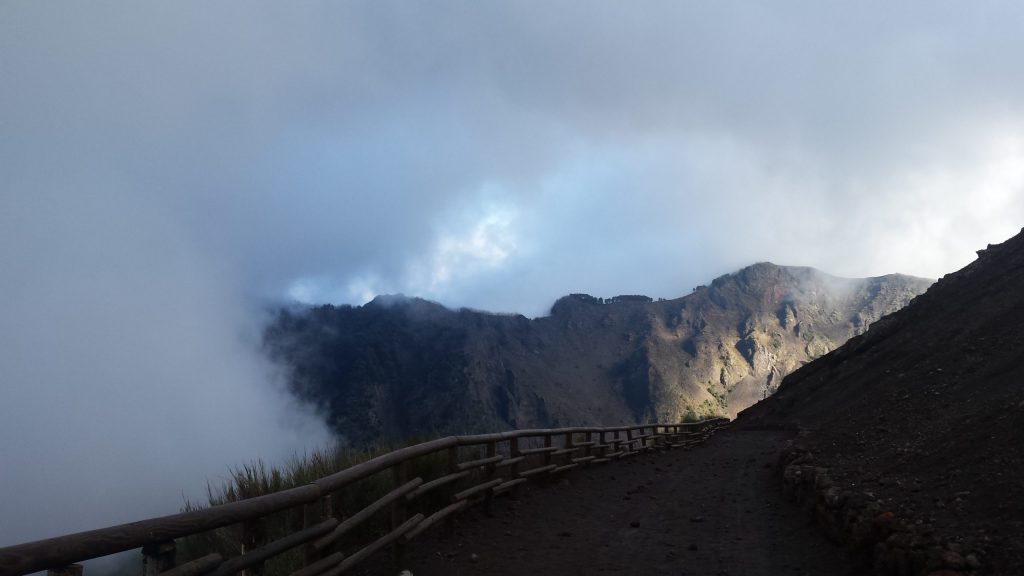
Here’s what a volcano teaches a city: nothing is guaranteed, so you might as well live.
Eat the pizza. Kiss the boy. Say the bold thing. Take the ferry to the island just because the light is good today. Skip school and go sunbathe on the rocks.
There’s a reason Napoli feels more alive than anywhere else I’ve been: it has spent two thousand years knowing exactly how fragile it all is. Not in a morbid way. In a pass the wine way.
Did you know that Vesuvio’s last significant eruption was in 1944?
What it does to Carolina
Carolina arrives careful, guarded, determined to keep her heart in a locked drawer.
And a city that lives like tomorrow isn’t promised is a very inconvenient place to try to stay careful.
The mountain doesn’t push her, exactly, but just… reminds her. Loudly. Staring at her face. Every single day.
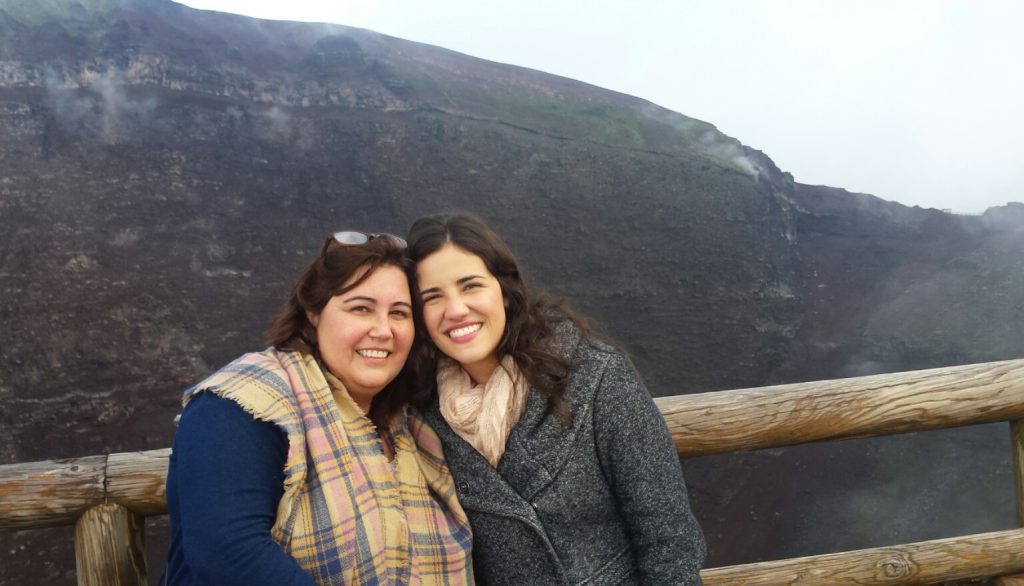
So tell me: could you live in the shadow of a volcano? And – go on – what’s the one view in your life that stops your heart every time? 👇
Dani. x
P.S. Loveandpizza.it is coming back in English, Italian and Portuguese. Save your slice and you’ll be first to know the moment your edition’s ready. 🍕
P.P.S. If you’d like to know more, I super recommend this book: In the Shadow of Vesuvius: A Cultural History of Naples (affiliate link). And if you’re actually going, this guide to visiting Vesuvio is useful for the latest practical information about tickets, transport and getting there. And be prepared for some uphill walking. Wear proper shoes. I did not. 🫣
Still hungry for another slice?
Follow @loveandpizza_it for story crumbs, Napoli discoveries and
beautifully complicated hearts. ❤️🍕
Beautifully written, and so informative! I learnt a great deal of new information. It’s interesting isn’t how people can live in a place where the world might end any moment. That similar thought was explained to me when I used to live in Wellington (in Nz), that on a particular road in Wellington we stood precisely over the fault line – the tectonic plates – which means if there were movement there, an earthquake over wellington then we would all be done for.
However ever with that knowledge it didn’t stop my from spending many years studying in Wellington and working in Wellington (well over a decade). But it does make you wonder if you are gambling with your life.
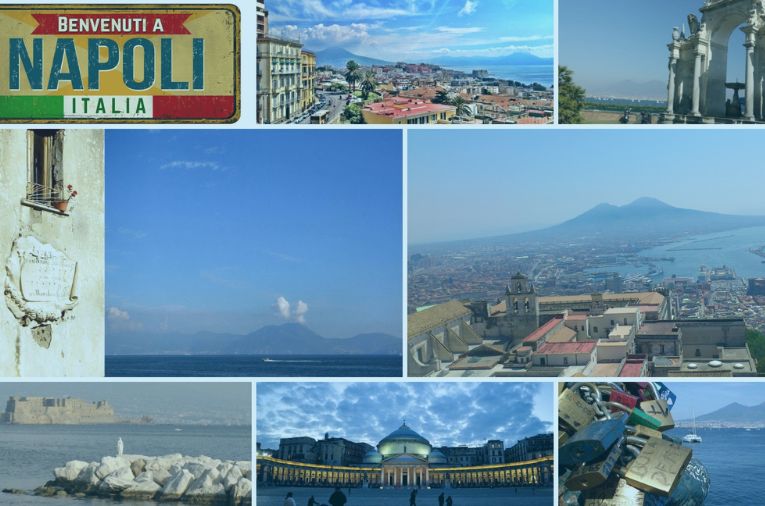
I’ve admired the photos you took of Mt Vesuvius at Napoli, such beautiful photos Daniela.
Hi Alice, first of all, thanks! The photos are stunning, imagine how it was actually being there! 🤯 I have to admit that I was terrified!
I had no idea that there was a risk of earthquake in New Zealand. I don’t hear much about the country at all, but that gave me the impression that it’s because it’s a super quiet, “safe” place. Actually, I’ve just remembered that last weekend I watched a documentary on Netflix about the Whakaari volcano. I was chocked…
I know what you mean about wondering if you’re gambling with your life. But would I live in Napoli? For sure? In Pompeii/Ercolano or anywhere near there? A huge “thanks, but no, thanks!” 😅
Your photos are absolutely stunning; they really bring your words to life. I especially loved the church photo with Vesuvius quietly stealing the scene in the background! 😊 As for a view that stops my heart every time, it has to be the Golden Gate Bridge. No matter how often I’ve visited, seeing it in person never loses its magic.
Thanks, Tamara! I have so many photos of all angles of Napoli with the Vesuvio in the background! 😂 I could probably write a year of posts and use different photos in them. haha
I think the Golden Gate Bridge is also beautiful, but I’ve only seen it in photos or films, but I agree, it never loses its magic. For me, closer to home, it’s Tower Bridge in London that has this effect. 🙂
It’s very interesting to think that the very thing that could end their existence is also the one thing that gives them life, and their identity.
Thank you for this fascinating read this morning.
I know! It’s amazing, isn’t it, Barbara? And you’re welcome. I’m happy you enjoyed reading the post. 🤗
This was fascinating! I learned so much from your post. I have to go there! Next trip to Italy. 🙂 You’re a great writer. Thank you for sharing your gift.
Hi Patricia! Thank you so much. I’m glad you liked the post. 🤗 And, oh, yes… Add it to your bucket list! 😉
Wow, beautiful pictures and fun writing. I’ve never been to Napoli or seen Vesuvius, but I’ve lived in Portland, Oregon, where I wasn’t far from Mount Hood or Mount Saint Helens – both are volcanoes. But you’re right – nobody thinks of them as that except for Mt Saint Helens – as I think it was in 1982 that it blew [badly] and it had a minor burp while I lived out there. I skied on Mount Hood because the top is glaciers and you can ski there most of the year. I never gave a thought that it could blow up under my feet nor did I think much about Portland getting knocked off the face of the Earth because of earthquakes [although I did some neighborhood training on what do you do if you have an earthquake]. But now I’m back on the East Coast, which is not as eruptive.
Lynn…. 😱😱😱 I’ve just watched on YouTube about the Mount St Helens eruption you mentioned… Gosh… Terrifying…
Thanks for enjoying the post! 😊
What a super blog with magnificent photos and so much history. I love how happy you and your sister are in front of the volcano! The one view that stops my heart every time are the mountains, especially the Great Smoky Mountains where Rich and I had planned to get a cabin for our sneak-aways.
Hey Martha! Thank you so much! ☺️ I’ve just researched the Great Smoky Mountains on Google and God…. they are soooo gorgeous! No wonder you had plans to get a place there. 🤗