
When a Place Becomes a Character
(Day 21 of 31 – story crumbs from the world of Loveandpizza.it 🍕)
This post was originally published at the beginning of my 31-day Loveandpizza.it journey. The complete English series is now here for you to explore, one story crumb at a time. 🍕
I recently found my old university dissertation. It was hiding in a folder I hadn’t opened in years, and I sat down to have a nostalgic little flick through, fully expecting to cringe.
Dear Reader (channelling my inner Lady Whistledown), I did cringe. But I also found something that made my heart skip a beat.
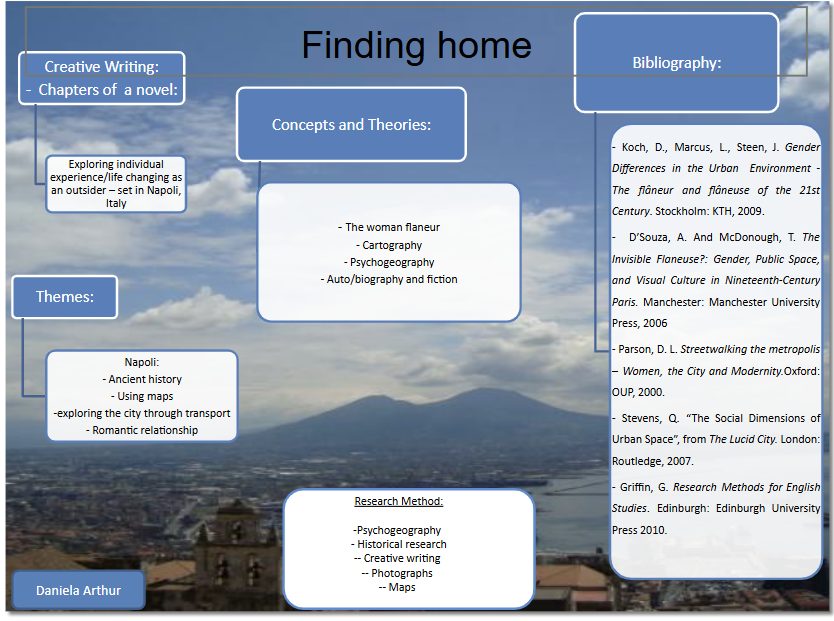
Because there, in black and white, with footnotes and a bibliography and everything, was a twenty-thousand-word academic argument that the city of Napoli is a character in this book. I’d argued it properly. At length. Fourteen years earlier.
I had completely forgotten I ever knew that.
The thing I didn’t know I was doing
Here’s my confession. For years I thought of myself as an intuitive, impulsive writer. I sat down, things came out, I had no earthly idea what was happening backstage. It felt a bit like magic and a bit like luck, and I was fairly sure that if I looked at it too hard, the whole thing would stop working.
Turns out I was doing something with a name. Several things, actually, all of which sound frightfully clever now that someone has told me what they’re called.
The main one: I wasn’t inventing Napoli and dropping Carolina into it. I was simply letting the real city do the work.
How you actually build a city into a book
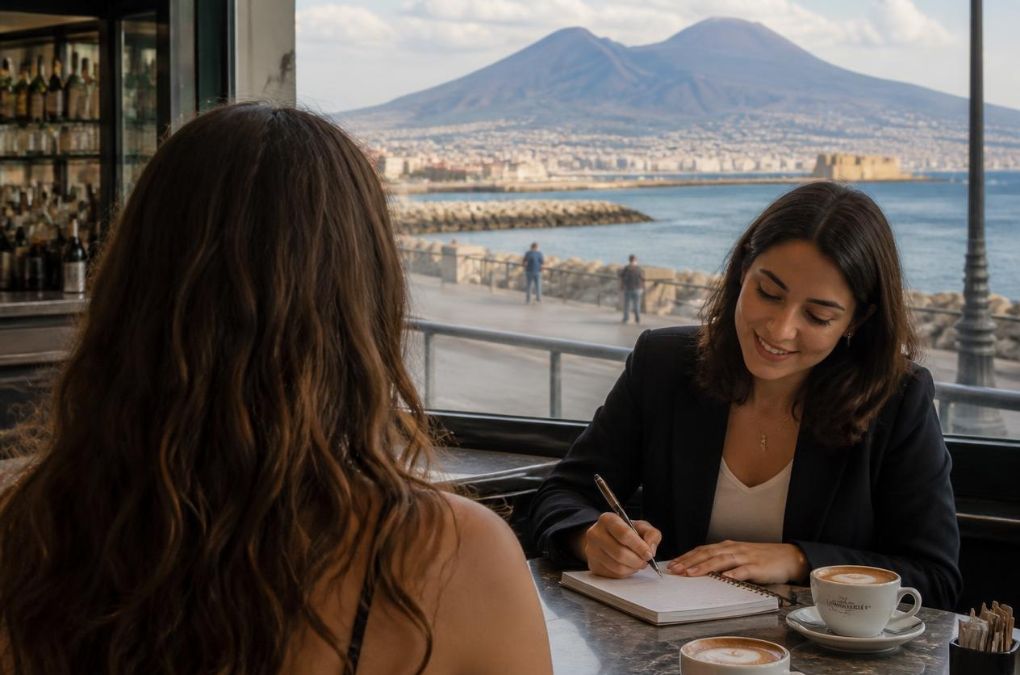
When I lived there, I was, without knowing the word for it, doing ethnography. Which is a very grand term for a very simple thing: I watched people. Constantly. I people-watched on the funicular and in the pizzerias and from my window over the Quartieri Spagnoli, and when I couldn’t work out what one of my characters would plausibly do in a scene, I watched – or I asked my students, mainly about the Italian characters. Where would he take her? What would he order? Would he say that, or is that a foreigner’s idea of what he’d say? They kept me honest – and most of the time, amused.
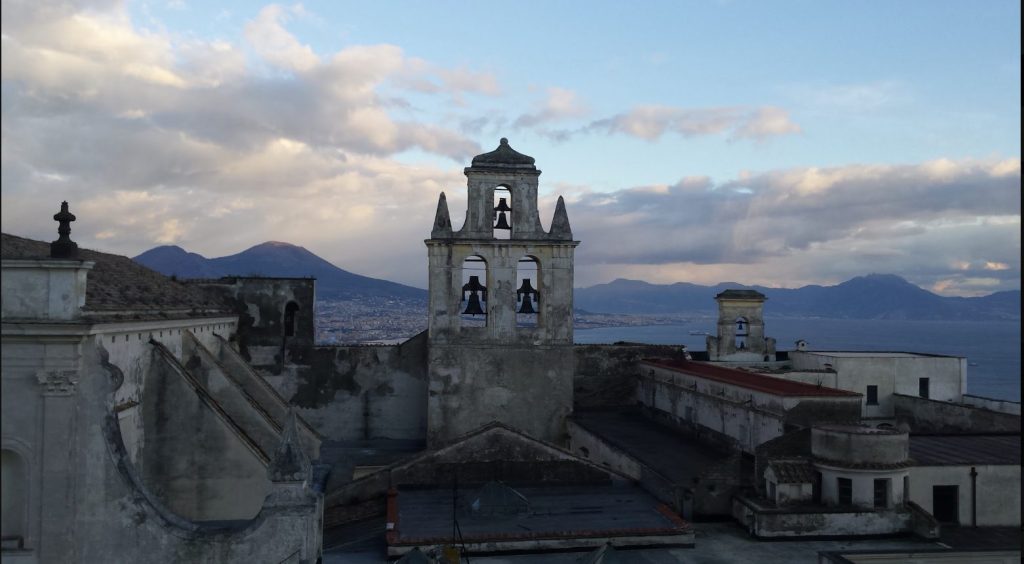
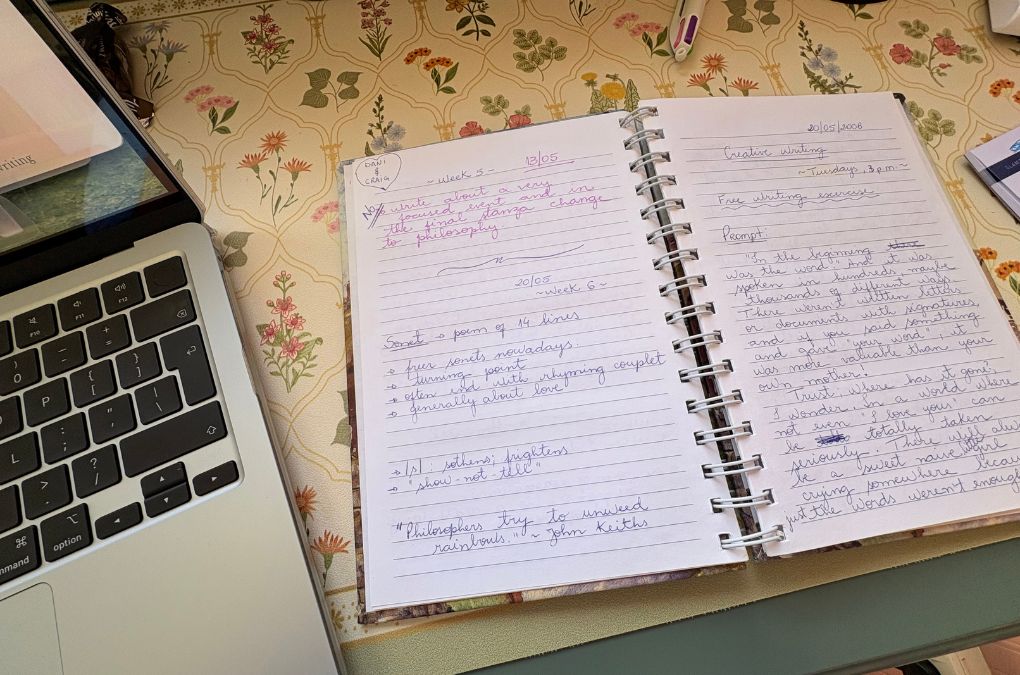
And in 2012, while I was still deep in the writing, I went back to Napoli on my own. Just me, a notebook, and a plan to walk until the book made sense again. I wandered the same streets Carolina wanders, trying to feel what she feels, trying to catch the details I’d started to forget. The noise. The wet-stone smell after rain. The way the city presses in on you and holds you up at the same time.
I thought I was refreshing my memory. I was actually doing fieldwork.
And then, the word for all of it
Here’s the part that threw me a little, reading it back.
In the dissertation, I claim the right to call Carolina a flâneuse. It’s a word that came to me through wider reading around Virginia Woolf and her circle, who’d pushed back against the old idea that flânerie was a strictly male activity – a lovely old word for a woman who walks a city not to get anywhere, but to read it, and in reading it, to read herself. Carolina uses the streets as corridors, not destinations. She’s not shopping. She’s looking for life.
And I’d written this line about her, which I don’t remember writing but which I’d apparently stake a degree on:
“She has absorbed the city.”
That’s the whole book, really. That’s what I’d been fumbling towards without the vocabulary for it. Carolina goes to Napoli to run away from her own life, and somewhere in all that walking, she finds herself – and home – instead. The city gets into her. It changes what she wants and what she’s brave enough to reach for.
You don’t set a story in a place like Napoli, oh, no… In Loveandpizza.it Napoli sets the terms for the story.
The chaos and secrets that needed to become a story
I’ll show you one more thing from those old pages, because it’s the reason I’m writing this post instead of shyly putting the folder away.
In the acknowledgements, I thanked my little sister Cintia “for being the inspiration to the heroine of these stories.”
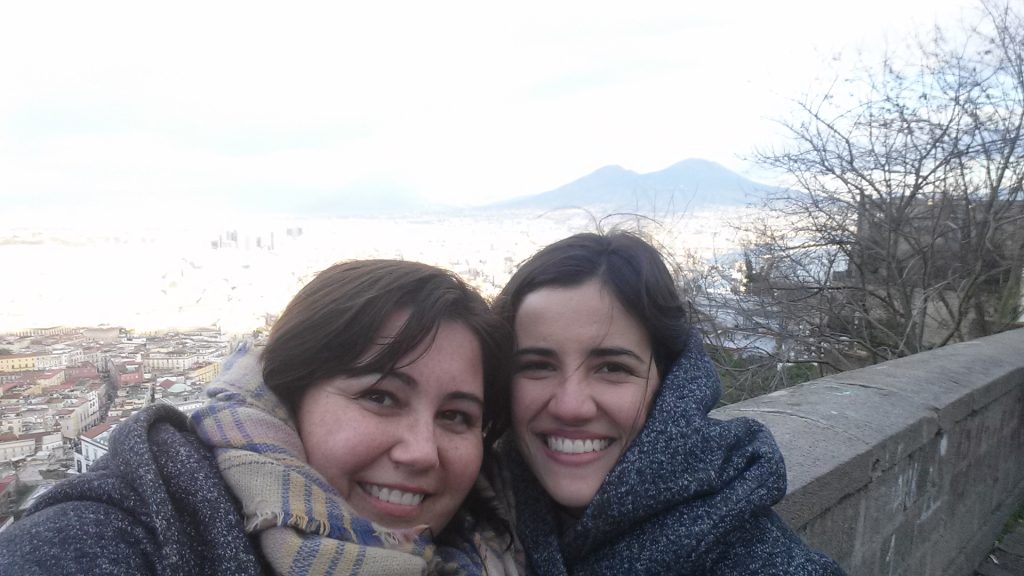
She still is. She was the muse from the very first word, and years later she flew out to Napoli with me to help bring the whole thing back to life. Some characters are built. Carolina was loved into existence first, and built second.
(Small aside, because it’s rather fitting for a book about finding your roots: the dissertation is filed under a different surname to the one I write with now. When I applied for Italian citizenship, I had to legally change my surname to reclaim the original family spelling, Pescuma. A woman going looking for where she comes from, and finding it. I didn’t plan the symbolism. Napoli did.)
So here’s the fuller timeline. I actually started writing Loveandpizza.it in 2009, while I was still living in Napoli – scribbling scenes in my laptop from the window of my kitchen, where the Wi-Fi was better, with no real plan for what they’d become. It was the MA, a couple of years later, that gave me a deadline and forced me to actually finish something with it. It got a modest little grade, went into a folder, and waited a few more years, until I finally finished it during a NaNoWriMo and published the original English version. And now it’s coming back in three languages, which I think is a rather good second act for a story I wasn’t even sure was good enough to bring into the world, but it was a love letter to a city I was still falling head over heels in love with.
And there’s plenty more in this series about that, and about the actual mechanics of writing the thing.
Your turn: is there a place that has got so far under your skin it feels like a person to you? A city, a village, a kitchen, a coastline? Tell me which one, and what it did to you. 👇
Dani. x
P.S. Loveandpizza.it is coming back in English, Italian and Portuguese. Save your slice and you’ll be first to know the moment your edition’s ready. 🍕
Still hungry for another slice?
Follow @loveandpizza_it for story crumbs, Napoli discoveries and
beautifully complicated hearts. ❤️🍕
“Ethnography” – who knew? 😉 I like to think I am a bit of an expert at it myself.
I find it fascinating how you learn foreign words for something you’ve always done intuitively.
I know! Super cool, isn’t it? I never wandered about a city the same way after that! 😅
I like the idea of walking a city to read it. I will try it.
It’s brilliant! What I usually do is read some facts about it first, and take notes of places I’d like to visit and the story of those places. When we’re walking with the context of the place is a different experience! 🤗
I absolutely love learning about the creative process behind a book, play, art…etc., it is sometimes just as fascinating me as the end result. Thanks for sharing, I thoroughly enjoyed this blog!
Thank you so much, Kimberly! It’s been super fun to write the posts for the blogging challenge. It’s brought me so many lovely memories! 🤗
A good read. I appreciate you painting a picture about the character of this place. Well, right now I don’t have a place that has got my favor, but if there were one, it’d definitely be Israel because the Savior of humanity is from there.
Thank you, Danwil! Napoli is engraved in my mind and tattooed in my heart forever.
I would love to visit Israel one day! ☺️
I’m fascinated by your process and how the whole book came together. I’m feeling invested in the story now, I think I will have to get a copy and read it.
Is there a place that has gotten under my skin? It just might be Newfoundland … maybe because I just came back from there … but since I know it won’t be my last visit, maybe not.
Thank you, Barbara! 🤗 I’d 100% recommend you get a copy and read it (but I am biased… 😏). If you want me to let you know when it’s out, you can sign up here: https://danielapescuma.com/loveandpizza
What a neat discovery! I used to keep my master’s degree papers and every once in a while, I’d read one and be impressed with my writing, in hindsight, although at the time, they did not seem special in any way. Well, I don’t think of Virginia Beach as a character, but I did love it. It’s the place where I finished growing up as a young adult, and there was a point where I could find my way anywhere, if you just told me one street or what it was near, and I loved that. And I miss some of my favorite places. And a friend who still lives there.
The way you feel about Virgina Beach is how I feel about my hometown in Brazil. I wouldn’t go back to live there, but I know every street (I am from the time we used paper maps to get around) and the ones that cross them. And nearly all of my friends still live there! ☺️